
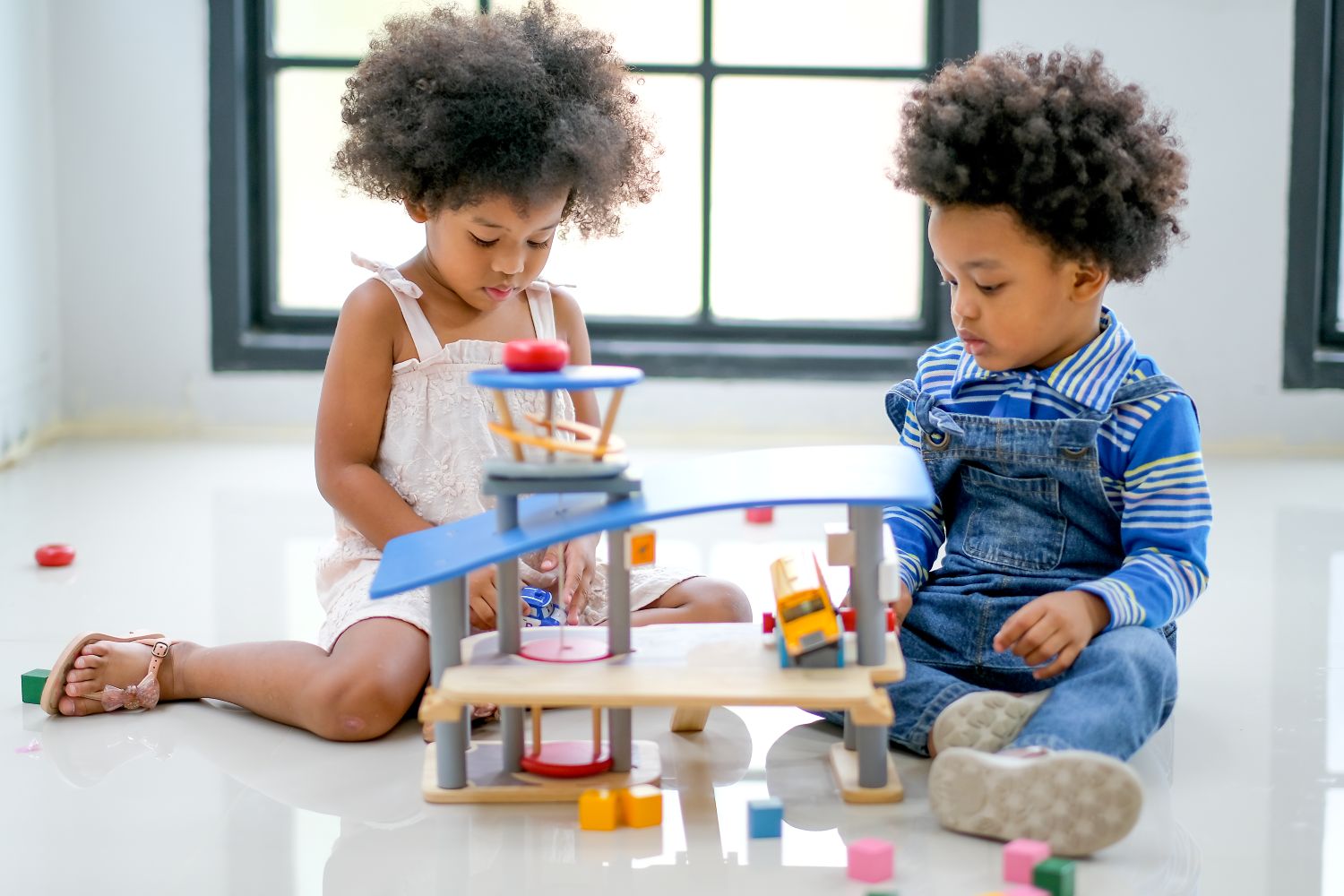
Toys are often seen as mere sources of entertainment, but they hold the key to unlocking a child’s full learning potential. Purposeful play is essential in fostering cognitive development and social skills from infancy through school age. This article explores the various types of educational toys, provides guidance on selecting age-appropriate options, and highlights how integrating these toys into daily activities can create enriching learning experiences. Discover how the right toy choices can transform playtime into a powerful educational tool.
The Importance of Play in Learning
Research indicates that children acquire up to 80% of their brain development through play, underscoring its importance as a fundamental element of early education. Play facilitates cognitive and emotional growth, significantly impacting learning retention.
A study conducted by the National Association for the Education of Young Children (NAEYC) demonstrates that children engaged in play-based learning exhibit enhanced problem-solving skills and creative thinking.
For example, incorporating role-playing activities can strengthen social skills and emotional regulation. Additionally, engaging in hands-on play with building blocks fosters spatial awareness and mathematical reasoning.
Encouraging unstructured playtime not only supports developmental progress but also cultivates a lifelong passion for learning.
Types of Educational Toys
Educational toys are available in a wide range of forms, each specifically designed to enhance various aspects of child development, including STEM skills and creativity.
STEM Toys
STEM toys, including LEGO kits and Snap Circuits, promote the development of critical thinking and problem-solving skills through hands-on engagement. The following are examples of notable STEM toys:
- LEGO Robotics (ages 10+) – Cost: $149.99; this kit enhances coding and engineering skills.
- Snap Circuits Jr. (ages 8+) – Cost: $49.99; this toy teaches fundamental electronics concepts.
- Osmo Genius Starter Kit (ages 6-10) – Cost: $99.99; this kit encourages creativity and critical thinking.
- K’NEX Education (ages 7+) – Cost: $79.99; this set focuses on physics and engineering principles.
- CodeMaster (ages 8+) – Cost: $29.99; this tool improves coding logic and programming skills.
Research indicates that children utilizing these toys may experience up to a 20% increase in math proficiency over a six-month period.
Creative and Artistic Toys
Creative and artistic toys, such as paints and building sets, significantly enhance fine motor skills and promote self-expression among children.
For instance, the following toys are excellent choices:
- The Crayola Inspiration Art Case, priced at $24.99, is designed for children aged 5 and older, providing an opportunity for exploration across various art mediums.
- The LEGO Classic Creative Brick Box, available for $49.99, supports imaginative play for children aged 4 and older, fostering essential problem-solving skills.
- Additionally, the Play-Doh Mega Fun Factory, offered at $19.99, enables children aged 3 and up to sculpt and create, thereby further enhancing their creativity.
Research indicates that children who engage in regular artistic activities exhibit a 20% increase in creativity, underscoring the significant impact that these engaging toys have on emotional growth and skill development.
Role-Playing and Imaginative Toys
Role-playing toys, including dress-up sets and play kitchens, are essential for fostering social skills and encouraging imaginative play in children. These toys serve not only as sources of entertainment but also as facilitators of crucial developmental milestones.
For example, a dress-up set, typically priced around $30, allows children to engage in imaginative scenarios, thereby enhancing their creativity. Similarly, play kitchens, which are priced from $50 upwards, provide opportunities for cooperative play, resulting in a significant 30% increase in social interactions among peers.
Additionally, the use of tools such as puppet theaters or tool sets can further develop storytelling skills and problem-solving abilities, making these toys vital components of any child’s developmental toolkit.
Choosing the Right Toys for Different Ages
Selecting age-appropriate toys is essential for maximizing developmental benefits and ensuring the safety of children at different stages of growth.
Infants and Toddlers
For infants and toddlers, sensory toys such as textured balls and musical instruments play a crucial role in fostering exploration and cognitive development.
Recommended sensory toys include:
- Sophie the Giraffe ($25): Renowned for its soft, chewable design and gentle squeak, which effectively engages infants.
- Baby Einstein Musical Toy ($30): This toy introduces a variety of sounds and melodies through interactive buttons, stimulating auditory senses.
- A set of textured balls ($18): Ideal for enhancing tactile skills and sensory exploration.
Engaging with these toys promotes fine motor skills, enhances auditory development, and encourages imaginative play, all of which are essential for early childhood growth and learning.
Preschoolers
Preschoolers derive significant benefits from toys that promote imaginative play and facilitate social interaction, including dolls, action figures, and board games.
For example, the Melissa & Doug Wooden Dollhouse, priced at $99, encourages role-playing activities, while LEGO DUPLO sets, available for $29, enhance creativity and fine motor skills. Additionally, cooperative games such as ‘Hoot Owl Hoot!’ priced at $20, foster teamwork as children collaborate to assist the owls in returning home.
Puppet sets, costing $25, further promote storytelling and enhance communication skills.
These toys not only provide entertainment but also function as valuable resources for the development of essential social skills, ensuring that playtime is both enjoyable and educational.
School-Aged Children
For school-aged children, educational games and building kits play a crucial role in fostering critical thinking and creativity, which are essential skills for academic success. Consider the following engaging options:
- The LEGO Education SPIKE Prime set ($329) promotes engineering skills by allowing children to build programmable robots.
- The Snap Circuits Jr. kit ($29.99) introduces children to the fundamentals of electronics, enabling them to create innovative gadgets while enhancing their problem-solving abilities.
- The Rush Hour game ($24.99) challenges players to plan their moves strategically, thereby improving their logical reasoning and critical thinking skills.
- CodeMaster ($29.99) provides an enjoyable way for children to learn programming concepts through interactive puzzles.
Each of these products not only offers entertainment but also contributes to the development of essential cognitive skills that are vital for future learning.
Benefits of Purposeful Toy Choices
Deliberate selection of toys plays a crucial role in enhancing children’s cognitive and social skills, providing substantial long-term benefits.
Cognitive Development
Toys specifically designed for cognitive development, such as puzzles and memory games, have been shown to enhance problem-solving skills by as much as 40%. For example, the “Memory Magic” card game promotes memory recall by engaging children in the activity of matching pairs; studies indicate a 25% improvement in memory tasks among regular participants.
Another commendable option is “ThinkFun Logic Games,” which foster logical reasoning skills. Research demonstrates a 30% enhancement in problem-solving abilities following consistent engagement with these games.
Additionally, construction sets like LEGO have been found to improve spatial awareness and creative thinking, with one study reporting a 20% increase in spatial skills among users.
Incorporating these toys into playtime can significantly advance cognitive development.
Social Skills Enhancement
Educational toys play a crucial role in enhancing children’s social skills by fostering cooperation and communication with peers.
Role-playing games and cooperative board games serve as effective tools for promoting social interaction. For example, games such as ‘Dungeons & Dragons’ encourage teamwork and negotiation while simultaneously enhancing vocabulary and problem-solving abilities.
Research indicates that children who regularly participate in these forms of group play exhibit a 30% improvement in social skills compared to those who do not engage in such activities. Moreover, simple cooperative games like ‘The Ladybug Game’ assist younger children in learning turn-taking, thereby reinforcing the significance of communication and collaboration.
Incorporating these activities into playtime can yield substantial benefits for children’s social development.
Integrating Toys into Daily Learning
Integrating toys into daily learning activities fosters an engaging environment that supports holistic development.
Creating a Play-Based Learning Environment
Creating a play-based learning environment necessitates the careful arrangement of spaces that promote exploration, creativity, and collaboration among children. To establish this environment effectively, one should begin by selecting toys that are appropriate for various developmental stages.
For infants, it is advisable to choose soft blocks and sensory toys that stimulate their senses. Toddlers benefit from the inclusion of stacking toys as well as art materials such as crayons and paper. Pre-schoolers thrive in settings that provide imaginative playsets and building kits.
Additionally, it is important to designate specific areas for different types of play, such as a quiet reading nook or a creative art station.
Research indicates that children in these enriched environments demonstrate engagement levels up to 80% higher than those in less stimulating settings, thereby fostering a lifelong love for learning.